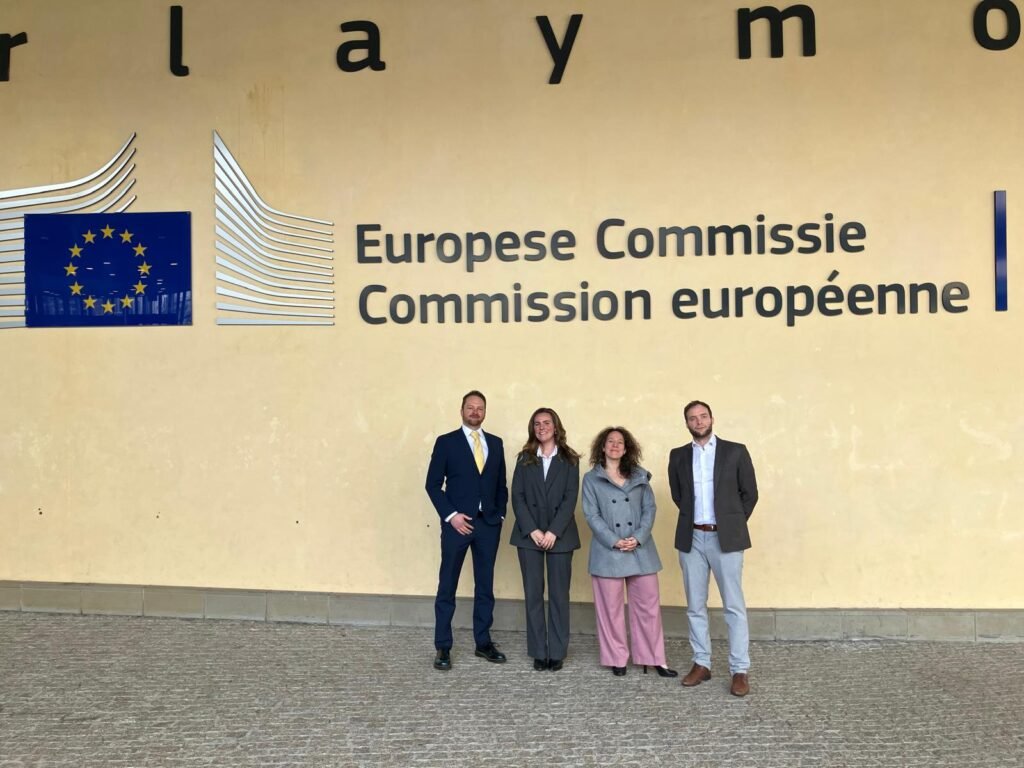
On 6 March 2026, representatives of the Fur Free Europe campaign met the European Commission to raise serious concerns about its handling of the Fur Free Europe European Citizens’ Initiative, which is backed by more than 1.5 million EU citizens. Respect for Animals was represented at the meeting by Richard Bissett, alongside Eva Lauwens of FOUR PAWS and Eurogroup for Animals. The initiative calls for an EU ban on keeping and killing animals for fur, and on placing farmed fur products on the EU market. The Commission is expected to outline its position by March 2026.
The meeting took place only after a complaint was lodged with the European Ombudsman over the Commission’s failure to engage properly with the initiative’s organisers, while giving fur industry lobbyists access to decision-makers. According to the Ombudsman, the complaint concerned the Commission’s failure to reply to a meeting request sent on 12 December 2025, as well as wider procedural concerns about how the initiative had been handled. The Ombudsman’s office confirmed on 2 March 2026 that it had opened an inquiry into the matter.
In that context, the absence of Olivér Várhelyi, the Commissioner responsible for Health and Animal Welfare, was particularly striking. For a meeting that occurred only after Ombudsman intervention, the failure of the responsible Commissioner to attend sent an extremely poor signal. It does not resolve the underlying concerns that led to the complaint, nor does it suggest that the Commissioner yet appreciates the seriousness of the Ombudsman inquiry. Recent reporting has also pointed to divisions within the Commission over whether to pursue a full ban or fall back on weaker welfare standards, even though the Commission has itself confirmed that those are now the core options under consideration.
This comes at a time of mounting pressure on the Commission over how it will respond to the Fur Free Europe ECI. The scientific case for a ban is already clear. In its 2025 opinion on animals kept for fur production, EFSA identified serious welfare problems affecting mink, foxes, raccoon dogs and chinchillas kept for fur production in the EU. There is also a compelling case for action on environmental and public health grounds, given the wider harms and risks associated with fur farming. A 2025 report by economist Griffin Carpenter concluded that the EU fur sector imposes costs on society that outweigh its economic contribution, underlining how weak the case is for preserving the industry on economic grounds.
Pressure is also growing from Member States. Euractiv reported this week that Austria has urged the Commission to back a full ban, arguing that this would provide greater legal clarity and help ensure fair compensation for producers leaving the sector. With the Commission’s decision due this month, the question is no longer whether the case against fur farming exists, but whether the EU is prepared to act on it.
Richard Bissett of Respect for Animals said:
“This meeting only happened because the European Ombudsman demanded it after the Commission failed to engage properly with the organisers of Fur Free Europe, while holding extensive consultations with fur industry lobbyists. For Commissioner Várhelyi to then not attend sends a very poor signal. More than 1.5 million citizens have backed this initiative, the scientific and economic case for a ban is clear, and Member States such as Austria are now openly pressing for decisive action. The Commission must choose the evidence-based option and bring forward a full EU ban on fur farming and the sale of farmed fur products.”